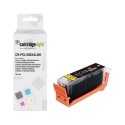
Are Refilled Ink Cartridges Worth It?
That usually becomes the real question when the printer runs dry five minutes before you need an invoice, school worksheet or set of meeting notes: are refilled ink cartridges worth it, or are they a false economy? For many home users and small businesses, the honest answer is yes, they can be worth it - but only if you buy the right refill for the right printer and know where the trade-offs sit.
Refilled cartridges appeal for two obvious reasons. First, they cost less than buying a brand new original cartridge. Second, they make practical sense for customers trying to reduce waste without changing their whole printing setup. If you print regularly and keep a close eye on running costs, that combination is hard to ignore.
The problem is that not all refilled cartridges are prepared to the same standard. A well-refilled cartridge that has been properly cleaned, tested and filled with suitable ink can perform very well. A poor one can leak, show error messages, print weak colours or fail far too early. That is why this is less about whether refilled cartridges are good or bad in general, and more about whether they are right for your printer, your print volume and your tolerance for risk.
Are refilled ink cartridges worth it for everyday printing?
For everyday printing, they often are. If your main jobs are letters, order forms, worksheets, returns labels, internal documents or occasional colour prints, a good refilled cartridge can cut costs without causing much disruption. Many customers simply want clear text, dependable output and a sensible price. In that setting, refilled cartridges can be a practical choice.
Where people get caught out is expecting every refilled cartridge to behave exactly like a brand new original from the manufacturer. Sometimes it will. Sometimes it will be close enough that you never notice the difference. And sometimes there are small compromises, such as slightly different colour tone, a lower page yield, or the need to run a cleaning cycle.
That does not make refilled cartridges poor value. It just means they suit some uses better than others. If you are printing draft documents, admin paperwork or general home use jobs, the savings may easily outweigh the occasional extra bit of printer maintenance.
The main benefit is cost, but not cost alone
The price difference is usually the first thing people look at, and fairly so. Ink is expensive, especially if you use original branded cartridges in a printer that takes multiple colours. If switching to refilled cartridges trims your print costs by a useful margin over a year, that matters.
For a home office or small business, lower cartridge spend can make routine printing easier to budget for. For households, it can mean replacing ink without feeling that a basic homework printout has suddenly become a premium item. In a workplace, it may also make sense as part of broader cost control, especially across several printers.
There is also the environmental side. Reusing an existing cartridge shell keeps more plastic and components in circulation for longer. That will not solve all sustainability issues around printing, but it is a practical improvement. Customers who want to reduce waste without buying a new printer often see that as a worthwhile advantage.
Where refilled cartridges can fall short
This is the part that matters just as much as the savings. Refilled cartridges can be less predictable than originals, especially on newer printers that are fussy about chip recognition and ink monitoring. Some machines accept them without complaint. Others display warnings, fail to show accurate ink levels, or reject the cartridge entirely.
Print quality can also vary. Black text is usually the easiest area for a refill to perform well. Colour printing is more demanding. If you print photographs, marketing materials or anything where exact colour matching matters, originals or high-quality compatibles may be the safer option.
There is also the issue of lifespan. A cartridge shell can only be reused so many times before wear affects performance. If the print head or contacts are already tired, a refill may not deliver the same reliability as a fresh cartridge body. That is why reputable suppliers inspect and test cartridges rather than simply topping them up and sending them out.
Quality depends heavily on who refilled it
A refilled cartridge is only as good as the process behind it. The better suppliers do more than add ink. They clean the cartridge, check the condition of key components, refill with the correct formulation, test output and confirm that the unit is fit for reuse. That extra care is what separates a sensible money-saving option from a frustrating one.
Cheap, poorly handled refills are what give the whole category a bad name. If a cartridge has not been tested properly, you may end up paying twice - once for the cartridge and again in wasted paper, cleaning cycles or lost time trying to fix streaky output. For businesses, downtime is often more expensive than the cartridge itself.
That is why support matters. If you buy locally or from a specialist supplier that understands printer models, cartridge behaviour and common faults, you have a much better chance of getting a cartridge that works as expected. And if it does not, you can get help quickly rather than being left to sort it out alone.
When are refilled ink cartridges worth it, and when are they not?
They are usually worth it when your printing is regular but not highly specialised. General office paperwork, school use, forms, emails printed for reference, invoices and occasional colour documents are all sensible uses. In those cases, value for money tends to be the deciding factor, and a good refill can deliver that.
They are less suitable when print quality has to be exact, when the printer model is known to reject reused cartridges, or when a failed cartridge would cause real disruption. If you are printing client-facing brochures, photographs for sale, presentation packs for a pitch, or urgent documents on a machine that is already temperamental, it may be better to avoid the gamble.
That middle ground is where expert advice helps. Some printers are quite forgiving and work well with refilled cartridges. Others are better matched with compatibles or originals. The best buying decision is not always the cheapest cartridge on the shelf. It is the cartridge that gives you the lowest overall cost without creating avoidable problems.
What to check before buying
Before choosing a refilled cartridge, it helps to think about three practical points. First, how important is print quality for the jobs you do most often? Second, how sensitive is your printer model to non-original supplies? Third, what would a printing problem cost you in time?
If your printing is routine and your machine has previously worked well with non-original cartridges, refills are often a sensible option. If your printer has a history of rejecting cartridges, showing chip errors or blocking nozzles, you may want to be more cautious.
It is also worth checking whether there is any guarantee or support behind the cartridge. That reassurance is important. If a supplier stands behind what they sell, the risk is lower. Cartridge Right, for example, supports customers with practical advice on cartridge choice rather than leaving them to guess from a model number alone.
The better question is value, not just price
People often ask whether refilled cartridges are cheaper, but the better question is whether they offer better value. A cartridge that costs less but fails early is not good value. A cartridge that saves money, prints reliably and keeps waste down usually is.
So, are refilled ink cartridges worth it? In many cases, yes. They make the most sense for everyday printing where keeping costs under control matters and perfect colour reproduction does not. They make less sense where output has to be exact or the printer itself is fussy.
If you are unsure, the safest route is to match the cartridge to the job rather than buying on price alone. That small bit of care usually saves more trouble than it costs, and it is often the difference between a smart refill purchase and a frustrating one.
A good cartridge should make printing easier, not turn it into another task on your list.